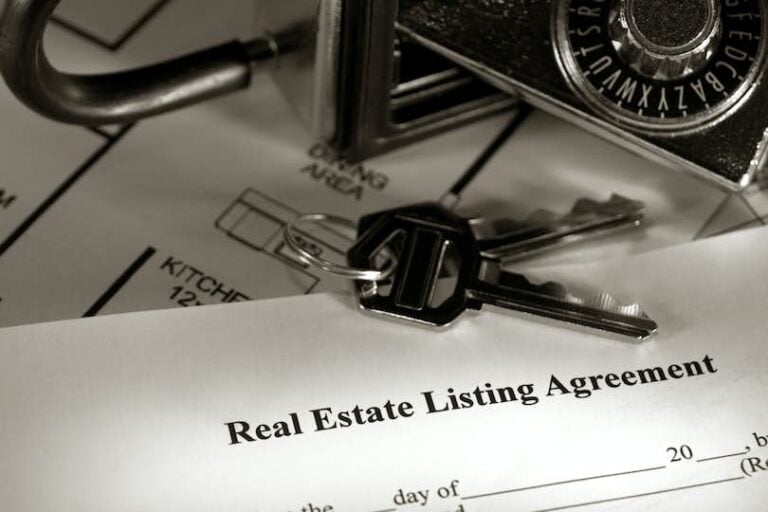
A listing agreement is the contract a home seller signs with their real estate agent. It authorizes the agent to legally represent the home sale and details the services they will provide, their commission rate, and more.
A listing agreement isn't a "trap." It's a normal part of hiring a real estate agent to sell your home. But the agreement is binding and you should never sign one without reading it first. Make sure that the agent is the right fit and you're getting the best value. Contracts are usually 3–6 months long, and canceling early may come with penalties.
If you're looking for a listing agent, consider using a free service like Clever Real Estate. Clever matches you with top local agents who have been vetted for performance and client satisfaction. These agents charge a low 1.5% listing fee while still providing full service, which means you can find the right realtor and save thousands.
What is a listing agreement?
A listing agreement is the contract a home seller signs with their real estate agent. It’s a legally binding document that guides the process of listing, marketing, and ultimately closing a real estate transaction.
A listing agreement authorizes your agent to legally represent you in the sale of your home, allowing them to market your home on a multiple listing service (MLS), install a lockbox, and show your home to prospective buyers.
It also specifies important details, including:
- The services the agent will provide (MLS listing, photography, marketing, showings)
- The commission you'll pay and how it's split
- How long the contract runs (typically 3–6 months)
- How either side can terminate it
- Disclosures required by your state
Listing agreements vary by type and location, but all share the same goal: providing a legal foundation that aligns the seller’s and listing agent’s expectations and responsibilities.
Keep in mind that you're contracting with the brokerage, not the individual agent personally. If your agent leaves the brokerage mid-contract, the listing usually stays with the brokerage unless you negotiated otherwise.
Do you have to sign a listing agreement?
If you’re a seller who wants to work with a listing agent, then yes — you’ll have to sign a listing agreement.
However, a listing agreement is not necessarily required to sell a home. You can opt to sell your home without an agent, commonly known as listing for sale by owner (FSBO).
Buyers don’t sign listing agreements. As the name suggests, listing agreements exclusively concern those listing a property for sale. Instead, buyers sign a buyer agency agreement, which became standard after the August 2024 NAR settlement.
The four types of listing agreements
Exclusive right to sell: most common
This is the standard. An exclusive right to sell agreement means you work with one agent and owe their fee, no matter who finds the buyer.
Agents strongly prefer this structure because they cover upfront marketing costs and invest significant time before getting paid. For sellers, it offers dedicated representation and avoids the confusion and disputes common with other listing types.
Term length is usually 3–6 months. Anything longer than 6 months without a good reason is a red flag.
Exclusive agency listing: uncommon
Exclusive agency agreements let you work with one agent while retaining the right to sell the home yourself. You only pay commission if the agent brings the buyer.
This setup is uncommon because it can create uncertainty around compensation and disputes over who actually procured the buyer. Also, an agent may be less motivated to market your home because they might not be paid for their efforts.
Open listing: can be useful for FSBO sellers
Open listing agreements allow for sale by owner (FSBO) sellers to work with multiple agents non-exclusively.
The agents market the home, and the seller handles the rest of the work, such as pricing, negotiations, and paperwork. Sellers pay commission only to the agent who brings a buyer.
Open listings are most common with FSBO sellers who want to stay flexible, and in commercial real estate. Residential listing agents rarely accept them because the odds of getting paid are too low to justify the marketing investment.
If no agent finds a buyer and you sell it yourself, you owe nothing.
Net listing: not legal in many states
In a net listing agreement, the seller sets a minimum net price, and the agent gets any profit that exceeds the agreed-upon listing price.
For example, let’s say you list your house at $500,000 and sell it for $575,000. Your agent’s commission would be $75,000 — the "net" difference between the listing and selling prices.
Net listings are illegal in many states and prohibited by the National Association of Realtors due to the conflicts they create.[1] A home could sell far above the listing price, leaving the seller feeling misled — or sell at or below the listing price, forcing the agent to absorb the loss.
What's inside a listing agreement
Most listing agreements run 5–15 pages. The form itself is usually a state real estate association template, vetted by attorneys, so it doesn't change much from agent to agent. What sellers actually negotiate sits in the blanks.
Here's what to read line by line before you sign:
- Services the agent will provide. MLS listing is standard. Professional photography, video, drone, staging consultation, open houses, and a real marketing budget should be specified — not implied.
- Commission rate and structure. Post-NAR settlement, this is now two separate items: the listing-side commission you'll pay your agent, and how you're handling buyer-broker compensation.
- Contract length. Usually 3–6 months. Sometimes up to 12 in slower markets. Longer than 12 is a red flag.
- The holdover clause. Also called the protection period or carryover clause. It says: if the contract ends and a buyer the agent showed during the listing period buys your home within X days afterward, you still owe the commission. Holdovers run 30–180 days.
- Termination and cancellation terms. What it takes to walk away, what penalties apply, and whether the agent can recover marketing costs.
- Required disclosures. Lead paint (federal, for homes built before 1978), state-specific property condition disclosures, agency relationship disclosures.
- Dispute resolution. Whether disputes go to arbitration or court, and which state's law governs.
- The exit clause (if any). Some agreements include a cancel-anytime clause. Most don't.
How the August 2024 NAR settlement changed listing agreements
The August 2024 NAR settlement changed how buyer-broker compensation gets handled — and that change shows up directly in the listing agreement you sign.
Before August 2024, listing agreements typically committed the seller to paying the buyer's agent a set commission (often 2.5–3%), and that offer was published on the MLS. Buyers' agents could see it before they ever showed the home.
After August 2024, MLS rules can no longer publish offers of buyer-broker compensation. The negotiation happens elsewhere — and in practice, most of it now happens inside the listing agreement itself.
Most listing agreements today include a line item for the listing-side commission, plus a separate decision about whether you'll offer buyer-broker compensation and at what cap. Some sellers leave that field blank and decide per-offer. Most still fill it in, because buyers are not yet writing buyer-agent compensation into their offers in any consistent way.
» READ: A full breakdown of the NAR settlement and what it changed
Three questions worth asking before signing:
- How is buyer-broker compensation handled in this agreement? Is there a default offer, and if so, what is it?
- Can I leave that field blank and decide per-offer? Some brokerages will agree to this; others have policy defaults.
- If a buyer's agent asks for compensation in their offer, how does that change my net? Walk through the math.
Marilyn Comiskey, team owner at The Comiskey Group in San Diego, frames the change this way: "After the NAR settlement changes that came into effect in August 2024 the contracts are much clearer. Offers of compensation to buyer agents can no longer be displayed on the MLS but compensation can still be negotiated outside of the MLS. The seller can decide to offer a concession to the buyer, to offer nothing, or to negotiate about it in the offer itself."
When do you sign a listing agreement?
You’ll sign a listing agreement as soon as you choose a realtor to sell your home.
Without a signed listing agreement in place, your agent isn’t legally entitled to represent you in your sale. In other words, they can’t do anything until that contract is signed.
Because listing agreements are legally binding, you should only sign if you’re 100% confident you’ve found a great agent.
Before signing a listing agreement, we recommend interviewing at least 2–3 real estate agents to weigh your options. This will give you the chance to ask questions and get a feel for which potential agent is the best fit for your situation, goals, and preferences.
While you’re in the process of choosing, be clear with each agent you speak with that you’re not planning to commit to anything on the spot. Setting this expectation can help you avoid situations where you might feel pressured to sign a contract without adequate time to comb through the fine print.
What to know before signing a listing agreement
A listing agreement is a legally binding document, so it’s crucial to read and understand it before you sign.
A typical listing agreement stipulates the key terms that will guide the sale of your home. This includes:
- The services the agent will provide — like an MLS listing, professional photography, and showings
- The commission rate and structure
- How long the contract will last — typically 3–6 months, or sometimes up to 12 months
- Required disclosures about material defects, such as lead paint
- Guidelines for terminating the listing agreement
- Other state and federally mandated legal requirements, such as anti-discrimination regulations
You can ask your agent to explain anything that seems unclear. If something in a contract seems problematic, seek legal advice from a real estate attorney or simply find another agent.
🚩 Possible red flags
Most listing agreements are standard and predictable, but you should still be on the lookout.
Examples of red flags include:
- A pushy agent. Avoid an agent who attempts to pressure you into anything. You should never feel rushed into signing a listing agreement before you’re ready.
- Unusually high commission. Average commission rates vary by location, but one that’s significantly over the national average of 2.76% could be cause for concern.
- A leisurely timeline. Anything longer than 12 months is a definite red flag. If you’re looking for a shorter time commitment, interview agents until you find one who’s on the same page.
- Vague or missing termination terms. If the contract doesn't tell you how to cancel, you'll have to litigate it later.
- A holdover clause longer than 180 days with a wide-open buyer list. Some agreements let agents "register" any buyer who walked through an open house, then collect commission if that buyer comes back six months later. Negotiate the list down to specific named buyers.
- Net listing in a state where it's still legal. Have an attorney review it before signing.
- An agent who refuses to strike or modify any clause. "It's standard" isn't an answer. Even state-association template forms get marked up routinely.
Can you negotiate a listing agreement?
Technically, everything in real estate is negotiable, but that doesn’t mean your agent will agree to your proposed terms.
Agents typically use standard, boilerplate contracts provided by their local associations. These contracts are heavily vetted by real estate attorneys to help both parties avoid legal complications.
Though the bulk of the contract will stay the same, there are opportunities to negotiate key details such as the listing price, listing term, and commission rate.
Boilerplate listing agreements also generally include a section where agents can write in any special considerations. For example, they may agree to special terms if you have a buyer picked out, since they won’t have to invest time and effort into marketing.
Here's what's genuinely negotiable:
- Listing price. The agent will recommend a price based on a comparative market analysis. You don't have to take their number — but if you list dramatically above it, expect it to sit.
- Contract length. Most agents start at 6 months. You can ask for 3.
- Commission rate (listing-side AND buyer-broker). Both are negotiable. So is the structure — flat fee, tiered, or percentage.
- Protection period length. Push to shorten it from 180 days to 60–90 if the standard runs long.
- Services included. Make sure professional photography, video, and drone are explicit, not assumed.
- Marketing budget. Get the dollar figure in writing. "We'll market your home aggressively" isn't a budget.
- Exit clause. Some brokerages will agree to a cancel-anytime clause if you ask. Most won't, but it's worth raising.
- Holdover/registered-buyer list. Negotiate this down to specific named buyers, not anyone who walked through.
What's effectively boilerplate and not worth fighting over: agency disclosure language, fair-housing language, MLS rules, state-required statutory clauses.
Jay Hurst, managing partner at Hurst Lending & Insurance and co-founder of Ribbon Home, frames the negotiation this way: an agent who lowers their rate without asking for anything in return is telling you something about their opinion of their own work. A discount that comes with a clear give-and-take — shorter contract, more limited services, faster decision timeline — is a different conversation.
Joy Aumann, a CIPS Realtor and co-founder of La Jolla Life, adds: "At this level of sales, commissions can also be negotiated. However, I always recommend that sellers consider the overall value being delivered rather than solely focusing on the commission rate. If a seller requests less commission, I would then request that they agree upon reasonable pricing, provide showings on their behalf, and agree upon a suitable launch strategy."
» SAVE: Find full-service agents who pre-negotiate their commission down to 1.5%
If you're going to push hard on one thing beyond the commission rate, push on the protection-period clause and the named-buyer list — those two together control what you owe after the contract ends, and they're almost always negotiable. Marketing-budget specifics and contract length are the next two. Everything else on the page that reads like legal boilerplate — agency disclosures, fair-housing language, state-required statutory clauses — usually is, and trying to strike it just makes the broker pull the contract.
State requirements vary, and the safest move in any state is to ask your agent to walk you through the state-specific section line by line before you sign. If they can't explain a clause in plain English, that's the clause worth flagging for an attorney.
Terminating a listing agreement
Your listing agreement spells out how cancellation works. It’s important to cancel your real estate contract properly. Without a formal release, you could still owe commission, even if you relist with another agent.
Problems like poor communication, weak marketing, or unethical behavior can justify ending the relationship. In other cases, events like a divorce, job loss, or family emergency may make selling no longer feasible.
If your agent is meeting their contractual obligations and no material issue exists, terminating will be much harder. Backing out also becomes more complicated if your home is already under contract. In that case, canceling incorrectly can expose you to legal action from both the buyer and your agent.
Here are the proper steps to take to cancel:
- Review your contract. You’re legally bound by its terms, and most agreements outline a formal cancellation process. Some may include mediation requirements or early termination fees.
- Talk to your agent. Many agents are willing to release unhappy clients or offer a switch to another agent within their brokerage to resolve the issue without breaching the contract.
- Get a written release. If you can’t resolve the dispute, request a written termination citing specific failures to meet the agreement. Without written confirmation, your agent may still be entitled to their commission — even if you hire someone else.
- Document everything. Keep copies of every email, every text, every promise made and missed. If the termination gets contested later, this is what protects you.
Justified grounds for termination vary by state, but generally include: material breach of fiduciary duty, lack of communication, failure to market the home as agreed, undisclosed conflicts of interest, and unethical behavior.
Termination gets harder when the agent has materially performed (active showings happening, marketing budget already spent), when your home is already under contract, or when the agreement has a strong holdover clause that follows you after termination.
Some agreements include a marketing-reimbursement clause — you reimburse the agent for documented out-of-pocket marketing costs (photos, staging, ads) if you cancel early. A flat cancellation fee is less common but does show up.
If you're hitting resistance, a real estate attorney consultation runs $300–$500 and is usually cheaper than a botched termination.
» MORE: Step-by-step guide to terminating a listing agreement
A clean termination has three things in common: a written release signed by the broker of record (not just your agent), a documented reason that maps to the contract's cancellation language, and a settled answer on whether you owe marketing reimbursement. A messy termination usually skips one of those — and the messy ones are how agents end up filing for commission on a sale the seller thought they closed on their own.
State-specific listing agreement quirks
Listing agreements aren't identical state to state. The biggest differences sit in the standard form sellers actually sign and the rules around termination.
- Texas: Listings use the TAR (Texas Association of Realtor's) Residential Real Estate Listing Agreement form. Standard contract length is 6 months, and termination requirements lean strict — the brokerage typically has to agree to cancel in writing. Net listings are legal in TX but rarely used.
- California: Listings use the CAR (California Association of Realtors) Residential Listing Agreement (RLA). Default contract length runs 3 months, and the form has a protection-period default of 90 days. Net listings are legal but heavily regulated.
- Florida: Listings use the FAR-BAR Exclusive Right of Sale Listing Agreement. Net listings are illegal in FL. Termination clauses tend to be strict, and most FL listing agreements run 6 months by default.
Whichever state you're in, the state real estate commission or association publishes the standard form. Read it before signing — even if your agent doesn't hand you the long version — and note which points you want to negotiate.
The safest sequence in any state is the same: pull the standard form from your state association's website, read it before your first agent meeting, and bring a marked-up copy to the table. Any agent who pushes back on you doing that has told you something about how they'll handle the rest of the deal.
When should you actually sign?
Not on the spot at the first meeting. The most common mistake sellers make is signing with the first agent they sit down with.
Here's a better sequence:
- Interview at least 2–3 agents. Ask each one for their last 5 closed listings, sold-to-list ratios, and average days on market. Compare the numbers, not the pitch.
- Take the contract home. Read the holdover clause, the termination clause, and the commission section twice. Sleep on it.
- Ask an attorney to review it if you're in NY, NJ, MA, or IL. Attorney involvement in residential sales is routine in those states. In other states, a $300–$500 consult is optional but never wasteful.
- Sign with the agent who answers your questions, not the one with the slickest pitch.
Your next step: Find the right agent
For most sellers, signing a listing agreement with a qualified agent is the safest way to sell a home efficiently and for top dollar. A good listing agent handles pricing strategy, marketing, negotiations, and contract details — and helps you avoid costly mistakes that can delay or derail a sale.
The key is choosing an agent you trust. Look for someone with a strong track record in your area, clear communication, and a willingness to explain their strategy before asking you to sign anything. Interviewing multiple agents and comparing their experience, recent sales, and marketing plans can help you feel confident before committing to a listing agreement.
If you want a low-pressure way to find a trustworthy agent, Clever Real Estate can help.
Clever matches you with top-performing local realtors from major brokerages, all vetted for experience, sales history, and customer satisfaction. You can compare agents, ask questions, and decide who’s right for you — with no obligation to sign and no upfront cost. If you do sign with an agent, you'll get full service for a low 1.5% commission rate.
- Answer 5 simple questions about your sale
- Get matched with 2–3 top local agents in minutes
- Compare options, choose the best fit, save up to 50% on fees
Frequently asked questions
A listing agreement is what sellers sign with their agent. A buyer-agency agreement is what buyers sign with theirs. After the August 2024 NAR settlement, buyer-agency agreements are now required before a buyer's agent can show a home in most states.
Three to six months is standard. Some agreements run up to 12 months in slower markets. Anything longer than 12 months without a clear reason is unusual and worth pushing back on.
Sometimes. It depends on the cancellation language in your specific contract and whether the agent has materially performed. Many agreements require cause to cancel without penalty. Some include marketing-reimbursement clauses that recover the agent's out-of-pocket costs. Read your termination clause carefully.
Check the holdover clause. If the buyer was someone the agent showed your home to during the listing period, you may still owe commission for 30–180 days after the contract ends, depending on the clause's terms.
Yes. It's a contract. Backing out without cause can expose you to a commission claim from the brokerage. That said, most listing agreements include some termination path — read your contract before signing, and document any concerns in writing as you go.
Commercial listing agreements tend to be longer term (often 12 months or more), more heavily negotiated, and may include open-listing structures that are unusual for residential. Commission structures also differ — commercial deals often use flat fees or tiered percentages instead of a single rate.
Usually no — most listing agreements only pay commission on a closed sale. But some include marketing-cost reimbursement if you cancel early. Read the cancellation and reimbursement clauses before signing.
In most transactions today, the seller still pays the buyer's agent — but it's negotiated separately from the listing-side commission and isn't published on the MLS anymore. Some buyers now pay their own agent directly, but that's still uncommon. Expect to discuss buyer-broker compensation explicitly in your listing agreement.