

Ever wondered how much a house actually sold for? In most cases, you can find the exact sale price — if you know where to look. The challenge is that not all sources are equally accurate, complete, or up to date.
Some tools (like real estate websites) are fast and convenient, but may show estimates or incomplete data. Others (like county records or the MLS) provide official, verified sale prices, but take a little more effort to access.
Below, we’ll break down the most reliable ways to find out how much a house sold for, ranked from quickest estimates to the most accurate sources — including what works best in non-disclosure states and when it makes sense to ask a real estate agent for help.
Clever connects you to top-rated agents for just 1.5%.
Clever vets agents based on performance from Berkshire Hathaway, Keller Williams, and hundreds of other top brokerages and negotiates lower insider rates on your behalf. When you work with Clever, you can sell for just 1.5%—roughly half the traditional fee.
Why would you want to find out how much a house sold for?
Whether you’re on the buying side, the selling side, or simply the curious side, there are several reasons to know how much a house sold for.
- Researching to see how much to list your house for
- Investigating an area to see what you can afford
- Interest in a particular house you have been eyeing for some time
- Exploring property value trends
- Preparing for price negotiations
How do you find out how much a house sold for?
When you want to learn the price of a house you’re interested in (or what your own home sold for in the past), there are a few ways you can do it. The method you choose depends on how accurate you need the information to be. Here are the most common ways to find out how much a house sold for:
| Source | Accuracy | Pros | Cons | Cost |
|---|---|---|---|---|
| Search engine | Low/medium | Fast, free, easy | Often outdated or incomplete | Free |
| Real estate websites (Zillow, Redfin, Realtor.com, etc.) | Medium | Convenient, searchable by address | May miss concessions; update lag | Free (some premium tools available for a fee) |
| County clerk and recorder | High | Exact recorded sale price | Time-consuming; limited in non-disclosure states | Usually free |
| County tax assessor | Low | Easy to access | Shows assessed value, not sales price | Free |
| Title company/closing documents | High | Full transaction record | Not publicly accessible | Varies |
| Real estate agent | High + context | Most complete data | Requires working with an agent | Free if you're working with an agent |
1. Look up the address in search engines.
You may be surprised how much you can learn about the property from a simple Google search. With search engine results, you can piece together a variety of details on a property, such as square footage, photos throughout the years, recent sales data, and even news articles about the property.
2. Head to real estate websites.
You can also use real estate sites like Zillow, Realtor.com, Homes.com, or Trulia.
These platforms usually display sold prices once a transaction closes and is reported — making them a solid option if you just need a general sense of what homes are selling for in a neighborhood.
That said, these prices aren’t always the full story. They may:
- Exclude seller concessions (like repair credits or closing cost assistance)
- Update with a delay, depending on local reporting rules
- Reflect listing data rather than final recorded deed data
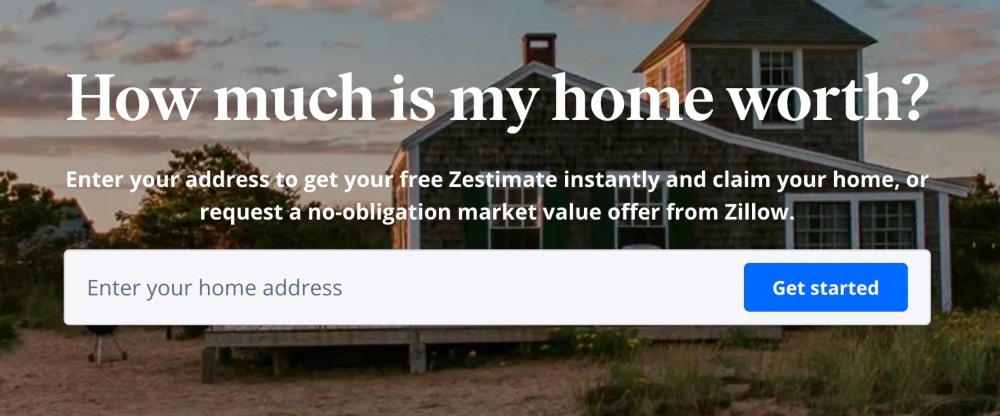
If you’re researching your own home’s value, tools like Zillow’s Zestimate can be a useful starting point. Zillow reports a median error rate of 7.52% for off-market homes, which is good for early research — but not precise enough to set a final asking price.[1]
If you need the exact sale price, the next options are more reliable.
3. Check with your county clerk's office.
For the most accurate information, check your county recorder or clerk’s office. This office maintains the official public record of real estate transactions, including the price recorded on the deed when a home changes ownership.
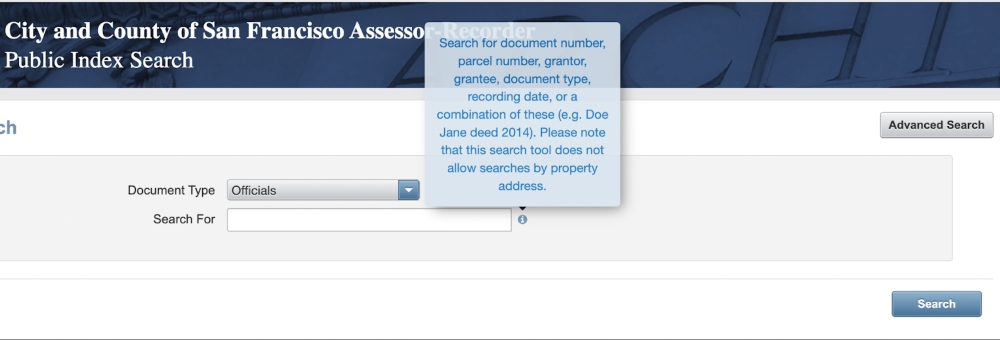
For example, if you search for this information in San Francisco, you will need the name of the past or current owner but cannot search by the property address. In some other counties, you might need only the address. Usually, the more information you have, the higher the chances you will obtain the data you’re looking for.
Many counties offer searchable online databases, while others require an in-person visit. Depending on the county, you may need:
- The property address
- The current or prior owner’s name
Recorded documents often include:
- Sale price
- Transfer date
- Buyer and seller names
- Deed type and ownership history
This is the best source for confirming what a home legally sold for — unless the property is located in a non-disclosure state.
If you prefer to do your search online, you can check the Public Records Online Directory to see which office has the records you need. Typically, you can do this search for free, but in some counties, you might have to pay a nominal fee for the search.
Non-disclosure states
If the property is in a non-disclosure state (or county), you may be out of luck. In these states, the sales price is not required to be reported to the public or be recorded in the database. So, it may not be possible to find the information you need through county records.
The current non-disclosure states in 2024 are the following:[2]
- Alaska
- Idaho
- Kansas
- Louisiana
- Mississippi
- Missouri (some counties)
- Montana
- New Mexico
- North Dakota
- Texas
- Utah
- Wyoming
4. Talk to the county tax assessor’s office.
Similar to the county recorder’s office, your local tax assessor can share the assessed value of a home (which is likely lower than what it sold for).
You will need only the property’s address (and the owner’s name, in certain cases) to see the property’s assessed value. This could give you a baseline understanding of what a property could be sold for, but it's not the same thing as the actual sales price or appraised value of the home.
5. Consult a real estate agent.
A local real estate agent can look up a property in the Multiple Listing Service (MLS) — the most comprehensive database of home sales available.
MLS data doesn’t just show the final sale price. It also includes:
- Whether the home sold above or below asking
- Original list price
- Price reductions
- Days on market
- Seller concessions
This context is critical if you’re pricing a home, preparing an offer, or negotiating — especially in competitive markets or non-disclosure states where public records don’t show sale prices.
If you’re selling, an agent can also prepare a comparative market analysis (CMA), which adjusts sold prices based on condition, upgrades, and timing — something no website can do accurately on its own.
You can also try to access the MLS without a realtor.
FAQ about how to find out how much a house sold for
How do I find out if someone owns property?
You can find out who owns a piece of property at the local county recorder’s office or on its website since the local governments keep track of all property records. Each record would contain the address of the property, what the property was sold for, and all past and current owners.
Alternatively, you can try the online public record database. Keep in mind that some states have non-disclosure laws that prohibit government offices from sharing real estate information with the public.
Are real estate transactions public record?
For most states, real estate transactions are public records. Many county offices even have websites so you can access data online, but some may require you to visit their local office.
There are a few states and counties that have non-disclosure laws and won’t release real estate transactions to the public. If you’re interested in details on a real estate transaction in a non-disclosure area, you should contact a local realtor.
How do I find out a house’s history?
When you want to find out the history of a house, you can do a fair amount of research online. For more accurate information, check for a property abstract at your county recorder’s office and ask to review the chain of title.
You can also check legal documents, such as deeds, mortgages, wills, probate records, tax sales, and even court litigation. These documents will also have the names of all the people who have owned the house, how long they owned it, and what they paid for it, among other things.
How do I find real estate comps?
If you want to find real estate comps, you can get a ballpark figure by using real estate websites and looking for homes in the same neighborhood or zip code. The more details that you have on the home you are trying to get a comparable value for, the better.