📆 What are the most important real estate facts to know heading into 2026? 📆
Overall, Americans are fairly pessimistic about the U.S. economy and many aspects of homeownership, home buying, and selling, with 77% saying owning a home isn’t affordable for the average person.
Buying a Home in 2025 | 2025 Homeownership Data | Selling a Home in 2025 | Generational Differences on Real Estate and the Economy | Real Estate Fun Facts
It’s just about time to close the books on 2025, a memorable year for many Americans. Nearly everyone dealt with the challenges of a persistently rising cost of living and an unpredictable economy buffeted by tariffs and trade wars.
At the same time, millions will also remember 2025 as the year they bought or sold a home amid a fast-changing housing market — one that bore little resemblance to either the scorching-hot seller’s markets of the early 2020s or the opportunity-rich buyer’s market that followed the Great Recession.
Over the course of the year, Clever Real Estate and our partners surveyed tens of thousands of Americans about their preferences and fears about buying, selling, and owning a home.
They also sounded off on hot-button topics, including the impact of climate change on homeownership, the presence of Airbnbs in their communities, and what it would take for them to live in a haunted house.
Meanwhile, Clever also crunched the numbers to uncover valuable insights on the cost of owning a home and where homes are selling the fastest, alongside analysis of which cities are the best in America for pizza and how cannabis legalization is impacting property values.
Look back on the most interesting, unusual, controversial, and surprising findings from Clever’s 2025 research, and learn what it suggests about the year ahead.
🏘 2025 Real Estate Facts
- Americans say most desirable city in the U.S. is a toss-up between Nashville and Tampa, which tied for the top spot.
- Homes rightfully feel pricey to buyers in almost all of the country’s 50 largest markets, as just two cities (Detroit and Pittsburgh) and one state (Iowa) have local median incomes high enough to affordably purchase the typical home.
- Over two-thirds of Americans (68%) believe homeownership is riskier now than it was 10 years ago due to climate change and natural disasters, while a similar number of homeowners (69%) say they took climate change into account when buying.
- The average American homeowner pays over $24,000 per year in addition to their mortgage payment on costs such as utilities, repairs, maintenance, property taxes, and homeowners insurance.
- Before they sold their home, home sellers expected to spend an average of $18,557 on home-selling expenses. In reality, recent home sellers paid more than triple that amount, with the average cost totaling $67,245.
- Although nearly two-thirds of home sellers (63%) believe real estate agents are inherently necessary to the sale process, that’s down 10 percentage points from the 73% who said the same in 2024.
- 61% of boomer homeowners say they plan to live in their homes for the rest of their lives, an increase of seven percentage points from 2024. Meanwhile, just 10% expect to sell in the next five years.
- Some millennials are so desperate to become homeowners that 41% would knowingly buy a home with asbestos or pests, such as mice, cockroaches, and spiders.
- The dream of homeownership feels so out of reach that more than 1 in 5 Gen Zers (21%) say World War III seems more likely to occur than purchasing a home in the next five years.
- From 2009 to 2024, home values increased $60,327 more in states where recreational marijuana is currently legal, compared to states where recreational marijuana is illegal.
Buying a Home in 2025: Where, What, and How Much
How, why, and where people are buying homes are among the most critical factors in the real estate market, and 2025 saw plenty of changes on these fronts.
New migration trends and fast-growing regions clashed with unaffordable housing prices in most parts of the country and the impacts of a changing climate. Nevertheless, many Americans are still striving for their dream home and even allowing themselves to daydream about what such a property might look like.
Where People Want to Live
The early 2020s have seen a substantial number of Americans moving somewhere new. In many cases, this wasn’t just across town or the state but to another part of the country. To find out more, Clever Offers surveyed 1,000 Americans about what makes a place to live desirable.
Nashville and Tampa tied for America’s most desirable city, with 22% of respondents selecting them in their top five most desired locales. Meanwhile, Americans labeled the District of Columbia as the most undesirable city for the third year in a row.
Those seeking a smaller city should look to Honolulu, the most desirable midsize metro in this survey.

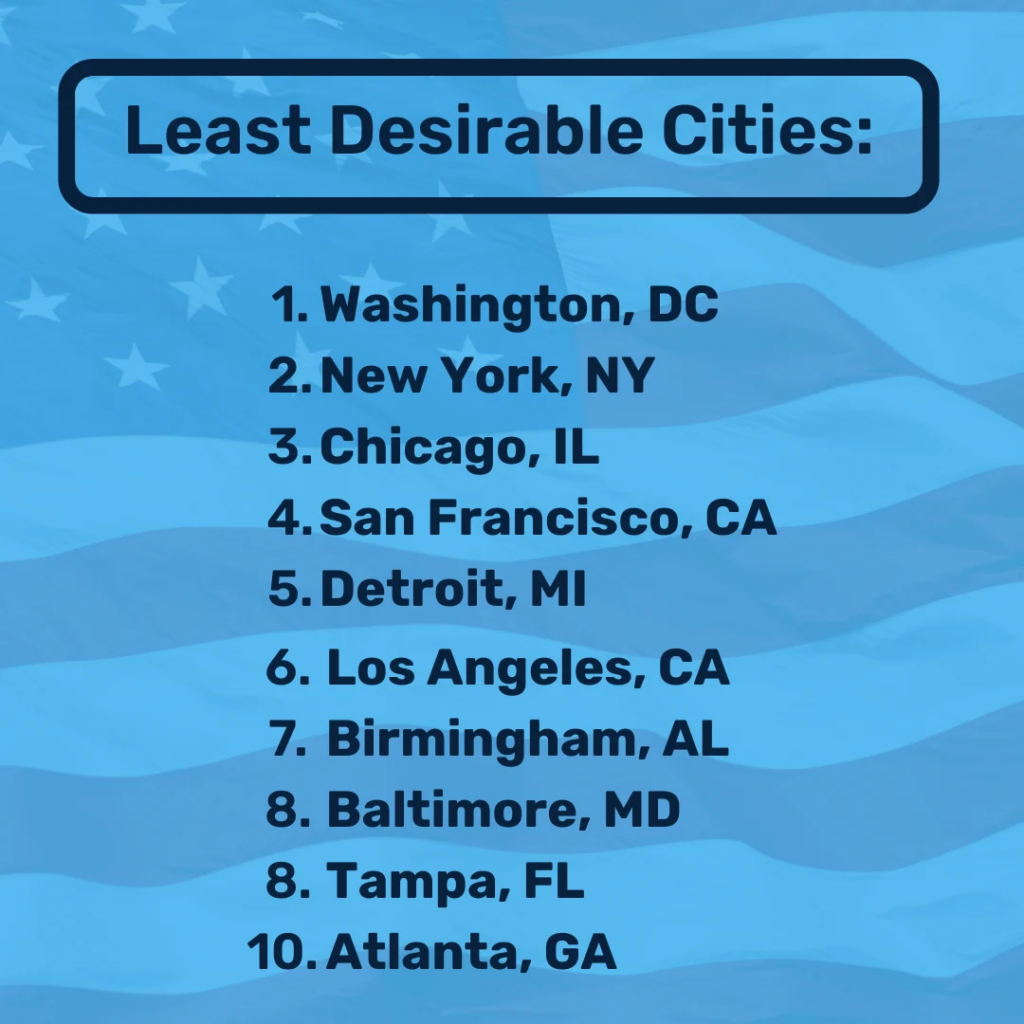
Among states, Florida is the most desirable (34%), though California is virtually tied at 33%.
California, however, is also the least desirable state (28%), and Florida also makes the least desirable list in fifth place. This reflects a stark gap in the way many Americans view these “love or hate” states.
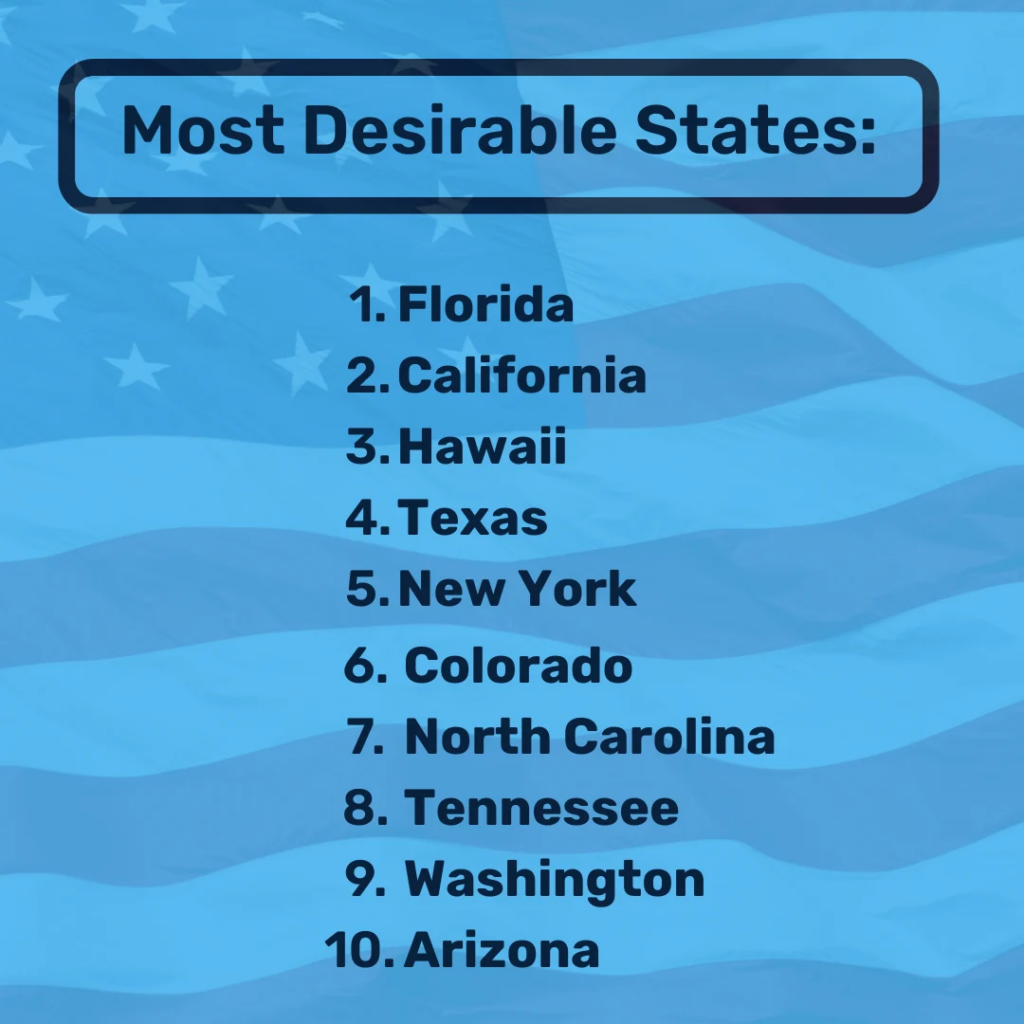
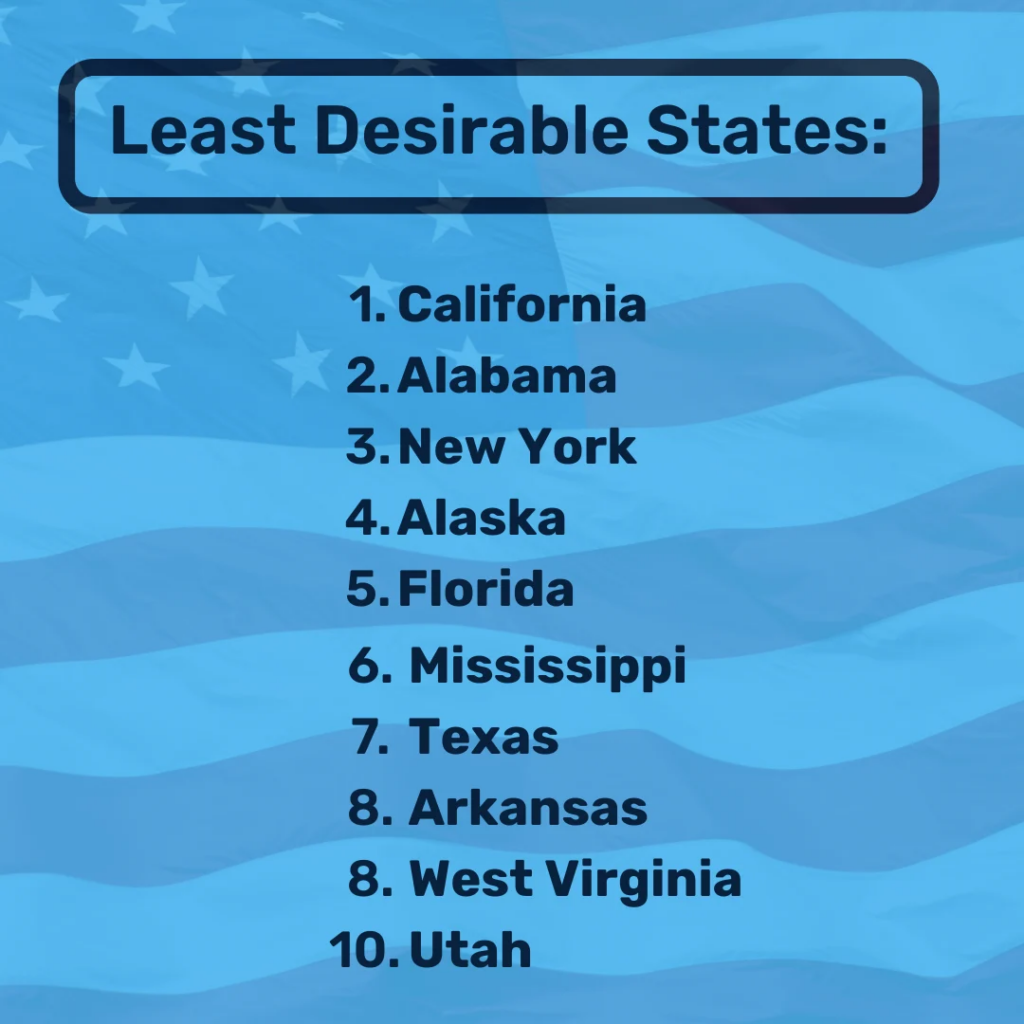
Although personal rankings are always subjective, a few key factors stand out among Americans as most important in making a place desirable. Good weather (67%), low crime rates (66%), and a low cost of living (64%) top the list.
Despite so many desirable cities scattered around the country, many Americans are staying put. The most common reasons are straightforward: 46% simply can't afford to move, 43% see moving as too much of a hassle, and 41% don’t want to leave nearby family and friends.
» Read the Report: The Best (and Worst) Places to Live in 2025, According to Americans
Salary to Afford the Average Home
If you’re one of the many Americans who have moved or considered moving in the past few years, it’s no surprise that housing has become quite expensive.
To afford the median-priced U.S. home, which cost $438,000 in the second quarter of 2025, home buyers would need a household income of $123,226 — but they were only making a median of $77,719, a difference of $45,507.
Only two cities — Detroit and Pittsburgh — have local median incomes high enough to affordably own the typical home in the area, using the common metric that housing costs shouldn’t exceed 28% of a household’s gross income. Both earn these spots primarily due to home prices that are far lower than the national median: $195,000 in Detroit and $250,000 in Pittsburgh.
On the flip side, the four least affordable cities are all in California: San Jose, San Francisco, Los Angeles, and San Diego.
Looking statewide, things are even more grim from an affordability perspective. Only Iowa has a statewide median income high enough to affordably purchase a median-priced home. However, Hawkeye State residents still would need 98.6% of the typical Iowan’s income to do it.
» Read the Report: Why Are Houses So Expensive? 2025 Data Shows Just Two Affordable U.S. Cities for Buying Homes
The Typical American Dream Home
Even if homeownership may be increasingly unaffordable, many Americans still allow themselves to dream a bit about their ideal property.
Clever Offers surveyed 1,000 Americans and found the typical respondent’s dream home is a custom new-build house that costs at least $500,000, spanning more than 2,000 square feet. However, only 47% of Americans think they’ll ever actually own their dream home.
If money were no object, Americans would most commonly pick a dream house in the countryside (44%), on the beach or the coast (41%), or on a lake (41%). However, pleasant scenery of some kind is almost universally desired: 90% of Americans would like their dream home to have scenic views, with roughly a third (32%) considering it a make-or-break essential.
The most common “must-have” features in a dream home, however, are a fenced-in yard (46%), a back patio (45%), and a front porch (44%) — clear evidence of the value of outdoor spaces, even compared to indoor ones that often get more attention.
When it comes to the trade-offs required in nearly every home purchase, over three-quarters of respondents (76%) would prefer a low-maintenance home over a high-end dream home that is harder to maintain. At the same time, 70% of Americans would rather have a less-than-ideal home in their ideal location than a true dream home in a less desirable place.
» Read the Report: Americans Reveal Their Dream Home Features and Preferences
Climate Change and Homeownership
Unfortunately, buying and owning a home in 2025 involves heightened risks that weren’t as concerning to past generations.
For many, this includes the impact of climate change on homeownership, which has become a more widespread concern in the 2020s, even outside of traditionally risky areas like those near the coasts or in wildfire-prone areas.
Over two-thirds of Americans (68%) believe homeownership is riskier now than it was 10 years ago due to climate change and natural disasters, while a similar number of homeowners (69%) say they took climate change into account when buying. What's more, 63% are willing to pay some kind of premium for a home located in an area at low risk of natural disasters.
This growing fear of climate change is already impacting the real estate market in other ways, too. More than 1 in 3 non-homeowners (35%) say they’ve ruled out a place to live because of climate or disaster concerns. This is most commonly said about California, which 40% of Americans would avoid living in due to climate change risk. Florida isn’t far behind at 36%, followed by Texas at 21%.
That’s likely good news for the market in areas at lower risk of natural disasters or climate change. About a third of Americans think more people will migrate away from coastal or flood-prone areas (34%) or that there will be a shortage of homes in "climate-safe" areas (30%) in the next 10 years.
» Read the Report: How Increasingly Common Disasters Are Reshaping America’s Housing Market
2025 Homeownership Data: What Owners Are Saying
Owning a home is a monumental achievement for many Americans seeking to put down roots and secure their financial future. However, it can be a difficult and stressful experience, too – whether it’s finding money in the budget for unexpected homeownership costs or dealing with bad neighbors or a changing neighborhood.
Recent Home Buyers
With so many Americans striving to someday afford a home, it’s worth looking at how homeownership is impacting those who have recently made the move. A survey from Clever found that 44% of recent buyers say their overall happiness has improved since purchasing a home.
However, nearly 1 in 4 (23%) say their overall financial situation has gotten worse since buying, with 1 in 5 (20%) saying their stress levels have also increased. More than 1 in 4 buyers (28%) also admit they had second thoughts after their offer was accepted.
More broadly, almost two-thirds of recent buyers (65%) have regrets about their home purchase, though this percentage rises to 73% among first-time buyers.
The most common regrets are all financial in nature: 1 in 5 buyers (20%) regret an interest rate that's too high, and 1 in 8 (13%) regret spending too much.
» Read the Report: American Home Buyer Report
How Americans Feel About Their Neighbors
One of the most significant aspects of homeownership can often be a factor that has nothing to do with the property itself. This is the impact of those living nearby, which Anytime Estimate explored in its 2025 neighbor survey.
The survey found that Americans value good neighbors so much that 82% say having them is just as important as price or location when buying a home. In fact, about 1 in 5 Americans (19%) say they’d pay $10,000 or more above the price of a comparable home if they knew they wouldn’t have bad neighbors.
Approximately 90% of Americans think they’re good neighbors, and only about 1 in 6 (16%) say they have bad neighbors.
Most are at least somewhat familiar with them, too: 87% of Americans say they know the names of at least some neighbors, although there’s a significant split between homeowners (94%) and renters (77%).
Overall, 86% think it’s important to at least get along with their neighbors. That may be for reasons other than just minimizing conflict. More than 1 in 8 homeowners (13%) believe their neighbors or their homes would cause problems selling their own home.
» Read the Report: How Americans Really Feel About Their Neighbors
Do Airbnbs Make Good Neighbors?
These days, homeowners in many communities are also dealing with a new type of neighbor: Airbnbs and their short-term occupants.
An Anytime Estimate survey found just 40% of Americans think Airbnbs make good neighbors, and only 30% believe Airbnb guests care about their neighborhood’s well-being.
On a personal level, 40% of Americans believe a neighbor converting their home into an Airbnb would decrease the quality of life for local residents, more than 4x the number who say it would improve it (9%). About half (49%) think short-term rentals should be banned outright in residential areas.
Fears like these likely fuel the behavior of the 49% who say they’d report their neighbor if they learned they were operating a short-term rental that violated local laws, even if they hadn’t experienced any issues from guests or the property.
Concerns about a neighborhood Airbnb may be well-founded, at least from a real estate perspective. About 60% consider the presence of a nearby Airbnb as a negative when buying a home. Roughly 28% would offer less on the home, and 32% wouldn’t make an offer at all.
» Read the Report: Data Reveals Widespread Concerns About Airbnbs in Neighborhoods
The True Cost of Owning a Home
Although there’s plenty of focus on home prices and mortgage rates, these are just part of the true cost of owning a home. Homeowners are on the hook for insurance, property taxes, maintenance, and much more, a fact that can significantly inflate how much the typical buyer should budget for their housing expenses.
Based on a Real Estate Witch analysis, the average American homeowner pays $24,529 per year in addition to their mortgage payment on costs such as utilities, repairs, maintenance, property taxes, and homeowners insurance. That’s the equivalent of $735,870 over a 30-year mortgage.
Broadly, these expenses can be split into:
- Utilities: $7,319
- Maintenance: $6,087
- Renovations: $5,762
- Property taxes: $3,057
- Homeowners insurance: $2,304
Those who are part of a homeowners association, an increasingly common arrangement in many areas, are responsible for an average of $3,077 extra, bringing the total to $27,606 annually.
These numbers seem to surprise many homeowners, 81% of whom say the costs of homeownership are higher than they expected.
Nearly half of homeowners (44%) also believe it’s easier to be a renter than a homeowner. It’s easy to understand this perspective, considering that American homeowners spend an average of 6.9 hours per week on personal home repairs, maintenance, and improvements. That adds up to more than 1 year and 83 days over the course of a typical 30-year mortgage.
» Read the Report: The True Cost of Owning a Home in 2025
Expectations, Opportunities, and Challenges Selling a Home in 2025
For those who sold a home in 2025 or are preparing to do so in the near future, many are expecting a substantial windfall following years of rising prices nationwide.
Our research sheds light on other aspects of selling a home that must be navigated before that big payday, ranging from hefty costs associated with selling to the difficulties involved with moving or listing in a slow market.
Meanwhile, 2025 saw more signs that the real estate market overall may be changing from the traditional agent-based system to something new.
The True Cost of Selling a Home
Those who have owned a home have likely become acquainted with the unexpected expenses involved in owning a home. However, home sellers also deal with their own surprise costs.
Before they sold their home, sellers expected to spend an average of $18,557 on home-selling expenses. In reality, recent home sellers paid more than triple that amount, with the true cost of selling a home totaling $67,245 on average.
This includes:
- Pre- and post-listing repairs, improvements, and renovations: $21,024
- Listing agent commission on the average-priced home: $14,204
- Optional buyer's agent commission on the average-priced home: $13,691
- Closing costs: $8,217
- Concessions to the buyer: $5,277
- Moving costs: $2,439
- Marketing and staging: $2,393
These hefty expenses caused 40% of sellers to feel financially strained during the home-selling process.
Overall, the selling process was a learning experience for many. If they had known the true cost of selling a home, 75% of sellers would have made different selling decisions.
» Read the Report: Selling a Home Costs More Than $65,000
Americans' Moving Trends
Selling a home naturally involves moving, and insights from Anytime Estimate’s study of moving trends shed light on how and why Americans relocated.
A majority of people who moved (54%) thought a change in location would fix their problems. Nearly 1 in 3 Americans (29%), however, say they thought they'd be happier after they moved, but they're not.
A substantial 60% of Americans say moving is not affordable, with respondents spending an average of $2,050 on their moves. Those moving long distances (over 100 miles) spent far more, averaging $3,291.
Those willing to grab a few friends and move themselves were able to save significantly, spending an average of just $1,334, compared to the $2,907 spent by Americans who used a moving company.
Even the most affordable options can weigh heavily on the typical budget. More than 1 in 3 Americans (39%) believe that moving made their financial situation worse, with 38% also saying the total cost of their move was higher than expected.
» Read the Report: 70% of Americans Have Regrets About Moving
Home-Selling Fears and Challenges
There’s no denying the stress and hassle involved in selling a home, but Clever research reveals there are a lot of competing challenges, emotions, and concerns at play behind this feeling.
Nearly 9 in 10 homeowners (88%) admit to having fears about selling their home, with more than 1 in 8 (13%) saying nothing could make them feel confident about selling. The most concerning scenario, which 85% of homeowners fear, is that they will feel pressured to accept a lowball offer on their property.
Meanwhile, preparing their homes for sale is what homeowners see as the single most difficult part of selling, with 1 in 5 (20%) saying so.
Many sellers are particularly concerned about what they don’t know about their home. A majority of homeowners (58%) worry that an inspection carried out as part of the sale will reveal problems with their property.
» Read the Report: Why Is Selling a Home So Stressful?
Expectations vs. Reality of Selling a Home
As with many aspects of homeownership, the expectations of future home sellers can differ dramatically from the reality faced by those who have actually hit the market.
According to a Clever Offers survey, nearly three-quarters of future sellers (72%) were confident they’d get offers above their asking price, a full 30 percentage points more than recent sellers who say this actually happened (42%).
Overall, 43% of recent sellers had to lower their asking price, a stark difference from the 77% of future sellers who are confident they won’t have to do this.
Still, these differences can provide positive surprises, too. Despite nearly all future sellers (94%) worrying they’ll make a mistake during their sale, just two-thirds of recent sellers (66%) say they did.
» Read the Report: Data Reveals the Gap Between Expectations and Reality
Role of the Realtor and Trends in Non-Traditional Sales
2025 brought new signs that the days of home sellers and buyers automatically hiring a real estate agent for their transaction appear to be waning.
First, an Anytime Estimate survey examining the role of the Realtor found that although nearly two-thirds of home sellers (63%) believe real estate agents are inherently necessary to the sale process, that’s down 10 percentage points from 2024.
Even though almost all sellers (91%) plan to use an agent, just 70% say they trust them. Roughly two-thirds (64%) think real estate agents value profits over their clients' best interests.
Cost remains the biggest motivator for those not using an agent, with 58% of this group saying they made the decision because commission is too expensive.
Those considering not using an agent should heed the experience of other non-traditional sellers in a Clever Offers survey. Sellers who use a real estate agent (86%) are happier with their choice of selling method than those who did not use an agent (71%).
In the end, 36% of non-traditional sellers wish they had used an agent.
» Read the Reports: What Does a Real Estate Agent Do? Sellers Speak Out on Their Needs; Home-Selling Trends in 2025
Cities Where It Takes the Longest to Sell
The differences between the many local real estate markets can be seen in the significant variance in how long it takes to sell a home in them.
A Clever Real Estate analysis of data found it took the longest to sell a home in Miami at 69 days, while homes in Grand Rapids, Michigan, sold the fastest, with a median of 13 days on market.
Grand Rapids also had the lowest months of inventory (1.3), while Miami was by far the highest at 7.2, nearly three months ahead of second-place Austin (4.5).
Meanwhile, the number of homes sold in San Jose, California, rose by 16.57% from 2023 to 2024 — marking the largest percentage increase among all 50 cities studied. Miami experienced the greatest decline, with the number of homes sold plummeting 5.24% over the same time period.
» Read the Report: U.S. Cities and States Where It Takes the Longest to Sell a Home
Boomers, Millennials, and Gen Z See Vastly Different Real Estate Markets, Economies
Not every generation experienced 2025’s real estate market and economy the same way.
Boomers face new challenges involving making their retirement money last and what to do with their homes as they age, while millennials and their often-growing families take up a larger portion of the real estate market.
Meanwhile, Gen Z is primed to make its impact on the economy and housing market in the years ahead. Here are some of the most notable findings when it came to the various generations and the critical differences between them.
Boomer Homeownership
Boomers have been the dominant force in the housing market for decades, and if they have their way, that might continue for years to come.
In a Clever Offers survey examining boomer homeownership, 61% of boomer homeowners say they plan to live in their homes for the rest of their lives. That’s up seven percentage points from 2024. Meanwhile, just 10% expect to sell in the next five years.
With decades of price appreciation, two-thirds of boomer homeowners (68%) would expect to make $100,000 or more in profit if they sold their homes today.
The picture isn’t entirely rosy for older Americans, though. Nearly half of boomer owners (49%) are worried that changes to Social Security or Medicare could force them to sell their homes, while 38% say they wouldn’t be able to afford their homes if those benefits were reduced.
In addition, roughly two-thirds of boomers (67%) believe senior homeowners should be exempt from paying property taxes, even if that means younger home buyers have to pay more.
Nevertheless, just over half of boomers (51%) say their generation is least responsible for the current lack of affordable housing, and 76% say they’re tired of being blamed for the affordable housing crisis.
» Read the Report: Nearly Two-Thirds of Boomer Homeowners Have No Plans to Sell
Millennial Home Buyer
Millennials are aging into their prime home-buying years, with even the youngest members of the generation nearing 30. Many apparently feel pressure when it comes to home buying, as 41% of millennial home buyers would knowingly buy a home with asbestos or pests, such as mice, cockroaches, and spiders.
That’s among the most eyebrow-raising findings of the Real Estate Witch survey, which revealed a nearly unanimous 96% of millennial home buyers have concerns about purchasing a home, with 44% saying they're worried about finding an affordable home — up from 35% in 2024.
Millennials are relatively pessimistic overall about their generation and homeownership. Just 21% of millennial home buyers think it's possible for their generation to afford a home, compared to 52% who thought the same a year earlier.
Even those who achieve this milestone may not find the experience to be everything they hoped for. Although 81% of millennials who were planning to buy in 2025 were confident they wouldn't have any regrets, 82% of current millennial homeowners regret at least one aspect of their first home purchase.
» Read the Report: Millennial Home Buyer Report
Gen Z Home Buyer
Gen Z is beginning to make a larger impact on the housing market, the workforce, and American culture, making it vital to understand their perspective.
For many, it’s a startlingly grim one. Clever Offers research found the dream of homeownership feels so out of reach that more than 1 in 5 Gen Zers (21%) say World War III seems more likely to occur than purchasing a home in the next five years.
It’s certainly not for lack of desire, as 90% of Gen Z want to own a home someday — but 62% worry they never will. Of this group, 82% say it's because they can't afford it, up from 57% in 2024.
With soaring home prices requiring increasingly high down payments, many younger would-be buyers feel unable to get ahead. Three-quarters of Gen Z (75%) say the rising cost of living has made it impossible to save enough for a down payment, and 26% say they couldn't put any money toward a house based on their current finances.
The outlook of nearly half of Gen Z is especially bleak, as 49% believe homeownership is so far out of reach that there's no point in trying to save now.
» Read the Report: Gen Z Home Buyer Report
Generational Views of Homeownership
There are critical differences and significant similarities between the various generations on housing and financial issues. To get a better picture of their precise views, Clever Offers surveyed Americans and evaluated their responses by age to reveal some valuable insights.
Roughly 9 in 10 boomers (90%), Gen Xers (90%), and millennials (89%) believe owning a home is still part of the American dream, but about three-quarters or more of each group (80% of millennials, 77% of Gen X, and 75% of boomers) also say it’s not affordable for the average American.
Affordability is the top factor when buying a home for millennials (44%) and Gen X (46%). However, it’s tied with location among boomers at 42% each.
Among non-homeowners, the generations differ notably in why they can’t afford a home. For boomers, this is not being able to afford maintenance repairs (64%). Meanwhile, 22% of millennials can’t afford a home because of their student debt.
» Read the Full Study: Surprising Findings on Homeownership by Generation
Real Estate Fun Facts
In addition to insights on the real estate market, economy, and the financial situation of Americans, Clever explored some other hot-button questions begging for an answer, such as:
- What city has the best pizza in America?
- How has the legalization of cannabis impacted the value of American homes among states with differing laws?
- Who would live in a haunted house?
Best Pizza Cities in America
There are few foods as universally beloved as pizza, whether you’re chowing down on a foldable New York slice, a piece of saucy Chicago deep dish, or one of the more offbeat, unusual styles from other regions of the country.
Although many people might assume the Big Apple or the Windy City is the top place to enjoy a pie, Clever’s research assessed pizza restaurants per capita, pizza prices, and other metrics to determine it’s actually a different Empire State city that has the best pizza in America.
Rochester, New York, earned the honor of America’s top pizza city for 2025. It has a pizza passion score of 98 out of 100 and more than 2x as many pizza restaurants per 100,000 residents (25) as the average city (12.4).
It beat out better-known options such as No. 8 New York City and No. 10 Chicago.
The cheapest average large cheese pizza in the U.S. can be found in Madison, Wisconsin ($13.77), while the cheapest average large pepperoni pizza is sold in El Paso, Texas ($15.40).
On the flip side, New York City has America’s most expensive average large cheese pizza ($26.00) and pepperoni pizza ($29.75), a major factor in its lower-than-expected No. 8 ranking.
» Read the Report: Best Pizza Cities in the U.S., Ranked
The Impact of Cannabis Legalization on Home Values
Plenty of factors impact the value of a home, from its size and condition to location, local schools, and proximity to amenities. A study from Clever Offers suggests the legal status of cannabis could be a factor, too.
From 2009 to 2024, home values increased $60,327 more in states where recreational marijuana is currently legal, compared to states where recreational marijuana is illegal.
The phenomenon is also seen in states that have only legalized cannabis for medical reasons. From 2009 to 2024, home values have increased $22,185 more in states where medicinal marijuana is now legal than in states where it remains illegal.
Overall, of the 10 states with the highest jump in home values since 2009, nine of them have legalized cannabis in some form. In contrast, nine of the 10 states with the lowest home value growth since 2009 have not legalized cannabis for recreational use. Illinois is the only recreational state in the bottom 10.
» Read the Report: Home Values Climb $60,000 Higher in States With Legal Recreational Cannabis
Haunted Houses
The housing market has been downright scary for many home buyers in recent years. Scary enough, in fact, that buyers are increasingly likely to overlook paranormal activity, especially if the home sells at a discounted price.
A Real Estate Witch survey found that a majority of Americans (57%) would feel uncomfortable living in a haunted house, but three-fourths (74%) would not move immediately if they discovered their house was bewitched.
Nearly 1 in 5 Americans (19%) believe they've lived in a real haunted house. Among them, 1 in 4 (25%) were aware of the haunting and still chose to live there.
Supposed hauntings seem to spook many would-be buyers, as two-thirds of Americans (68%) would offer below the asking price for a haunted house. However, only 32% of haunted homeowners expect to sell below market value.
» Read the Report: More Than Half of Buyers Aren't Afraid to Purchase a Haunted House
About Clever
Since 2017, Clever Real Estate has been on a mission to make selling or buying a home easier and more affordable for everyone. 12 million annual readers rely on Clever's library of educational content and data-driven research to make smarter real estate decisions—and to date, Clever has helped consumers save more than $210 million on realtor fees. Clever's research has been featured in The New York Times, Business Insider, Inman, Housing Wire, and many more.