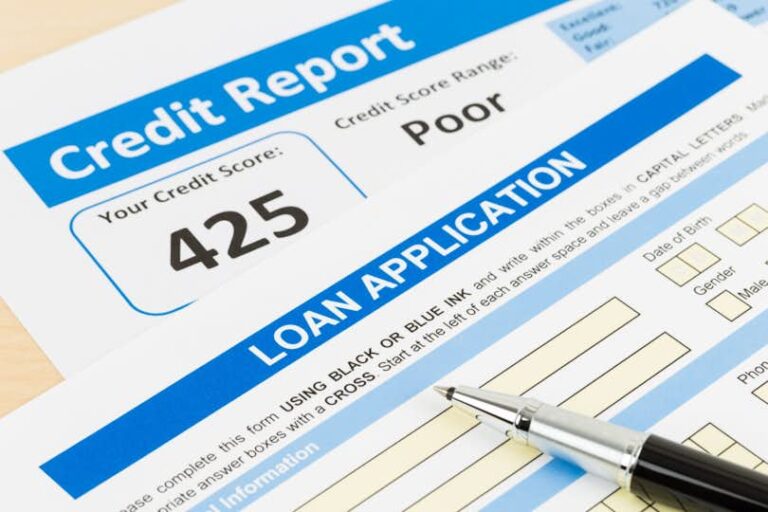

You have an eviction behind you, and somewhere along the way someone told you it means you can't buy a house. Maybe it was a relative, maybe it was one lender who said no. Either way, it's worth hearing this plainly: an eviction by itself does not disqualify you from a mortgage.
You're not in a rare situation, either. Roughly 1.23 million eviction cases were filed in 2025 across the jurisdictions Princeton's Eviction Lab tracks, a group of 10 states and 38 cities that together house about a third of U.S. renters, and that number was slightly higher the year before.[1]
An eviction is not a foreclosure. Foreclosure and bankruptcy trigger multi-year mortgage waiting periods. A rental eviction triggers none. What a lender weighs is your credit score, your debt-to-income ratio (DTI, the share of your monthly income that goes to debt payments), your down payment, and whether any unpaid balance tied to the eviction has been resolved. The eviction itself isn't on that list. Ryan Smith would know: he's a landlord who has filed evictions against tenants who later went on to buy. "Usually, the evictions are not the obstacle," says Ryan Smith, founder of Cinch Home Buyers, a North Carolina company that owns around 40 rentals. "It's about the DTI. If you clean the debt, you clean your chances for a mortgage."
Does an eviction go on your credit report?
Most people say "an eviction on my credit," and it's worth untangling that phrase, because the eviction usually isn't the thing on your credit report. Three separate records get lumped together here, and they behave very differently. Nick Heimlich, an attorney and founder of Nick Heimlich Law, puts the distinction simply: a dismissed case, a lease breach where nothing is owed, and a satisfied judgment are three legally different outcomes, and a lender is looking at repayment risk, not the word "eviction." (This is general information, not legal advice for your specific case.)
Here's how the three records break down:
| What it is | Where it shows up | How long it stays | Will a mortgage lender see it? | What you can do about it |
|---|---|---|---|---|
| The eviction case itself | Tenant-screening reports and county court records, not your credit report | Up to 7 years | Usually not; lenders pull credit, not tenant-screening reports | Seal or expunge it where your state allows |
| Unpaid rent sent to collections | Your credit report, under adverse accounts | 7 years | Yes | Dispute it if it's inaccurate; negotiate pay-for-delete |
| A civil (money) judgment | Public court records | 7 years or until the statute of limitations runs, whichever is longer | Off credit reports since 2017, but findable in a background check, and it can attach to a property's title | Pay it, settle it, or set up a written repayment agreement |
Civil judgments stopped appearing on credit reports on July 1, 2017, and tax liens followed in April 2018, both under the National Consumer Assistance Plan.[2]
The eviction itself isn't on your credit report
The eviction filing lives on tenant-screening reports and in county court records, not on the credit report a mortgage lender pulls. Practically, that means an eviction tends to hurt your next rental application more than your mortgage application, because rental screening is where it surfaces. It can stay on those tenant-screening reports for up to seven years.[3] The same seven-year window applies to what a landlord's background check can report.[4]
Unpaid rent becomes a collection account
This is the piece that actually reaches your credit report. If your landlord sends past-due rent to a collection agency, it shows up as a charge-off and a collection account under the adverse-accounts section of your report. Not every eviction produces one. Devin Henry, president of Nomadic Real Estate, says about 30% of the evictions his company files involve no unpaid balance at all, since plenty are for lease violations like an unauthorized pet rather than missed rent. When there is a balance, the collection typically surfaces roughly 60 to 90 days after the filing, in his company's experience, so a lender looking two years later is seeing the collection, not the court date.
Court judgments, and what a "judgment" even is
A judgment is the official result of a lawsuit: a court's ruling that you owe a specific amount. A money judgment can lead to wage garnishment and can attach as a lien to property you own.[5] Most evictions never get that far. Smith estimates only about a quarter of the tenants he's evicted ever had a judgment entered, and as he notes, those judgments haven't been on credit reports since 2017 anyway. Ashley Morgan, a debt and bankruptcy attorney in northern Virginia, confirms the rule from the legal side: "Legal proceedings do not show up on regular credit reports. Lawsuits, tax liens, evictions, etc. stopped showing up on credit reports years ago." The judgment can still matter for a loan, though.
How badly does an eviction impact your credit?
The impact on your credit depends on how your landlord handles the eviction.
If your landlord sells the past due debt to a collection agency, it will show as a collection account on your report. "A collection account can lower a credit score by 50–150 points and remains on the credit report for seven years," explains Steven Parangi, owner of Alpine Mortgage.
If your landlord reports the past-due payments directly, they land in your payment history, which is the single biggest input into a FICO Score at 35% (amounts owed is another 30%).[6]
Paying a collection isn't the same as erasing it. Jethro Adedeji, founder and CEO of Crowned Credit, points out that a paid collection can still sit on your report and still drag the file, because a lender is pricing your whole profile, not one line item. How much a paid collection helps also depends on the scoring model: FICO 8 still counts paid collections, while FICO 9 and 10 largely ignore them, and lenders don't all use the newest version.
In some scenarios, an eviction won't lower your score. "If the account is just a judgment and not reporting in collections, then the eviction likely won't be impacting your credit. Similarly, if you pay off the eviction balance before it is reported on your credit, it likely will never report," says Morgan.
How to get an eviction off your credit report
Before you send anyone a dollar, work through five questions in order. Paying blindly is the most common mistake here, and it can leave you worse off.
First, pull your reports and see what's there
Pull all three of your credit reports for free at AnnualCreditReport.com. Any collection tied to unpaid rent shows up under adverse accounts. The eviction case itself won't be there; for that, request your tenant-screening report. This is the cheapest, most useful thing you can do today, and it tells you which of the three records from the table above you're dealing with.
Make sure the debt is really yours, and correctly reported
This is the counterintuitive step. Rental collections are frequently wrong on the amount or the date, so disputing an inaccurate or unverifiable collection is often more effective than paying it. Federal regulators have made the point for you: the FTC and CFPB took action against a major tenant-screening company for reporting inaccurate and mislabeled eviction records, including tagging amounts a landlord simply claimed as a "Judgment Amount."[7] If something's off, you have the right to dispute it, and the bureau generally has 30 days to investigate. Start with the CFPB's dispute guidance and its sample letters, and send one to the furnisher (the landlord or collection agency) as well as the bureau.[8]
If the debt is valid, get pay-for-delete in writing first
If the collection really is yours, you can try to negotiate its removal. Offer to pay a portion of the past-due rent or eviction fees in exchange for the landlord or collector contacting the bureaus to delete the item, and get that agreement in writing before any money moves. As Adedeji puts it, get the resolution in writing, ideally an agreement to delete the item on payment, because paying without one can leave the collection sitting there marked "paid" and still dragging your file. Heimlich makes the same point from the legal side: the big mistake is paying off a collector without a written agreement first.
Ask for copies of the deletion letters and the certified-mail receipts in exchange for your check. Keep your expectations realistic, though: the landlord has no obligation to accommodate you, and some will insist on the full past-due balance plus fees.
Check the statute of limitations before you pay
Debt has an expiration date for legal collection, and it varies by state. If your rental debt is past that limit, you may not need to pay it to move a lender forward, and in some states making a payment can restart the clock and give the debt new life. This is state-specific enough that it's worth a quick check, or a question to a legal-aid attorney, before you pay on an old balance.
Talk to your loan officer before you pay anything
Timing can undo a good decision. Ryan Zamudio, a mortgage advisor at Edge Home Finance in Phoenix, points out that paying off a collection days before closing can drop a FICO score by 20 to 40 points and trigger a fresh credit pull, which is the last thing you want mid-loan. Loop in your loan officer on the sequence. Just make sure you settle it the right way, in the right order.
If you can't reach any agreement, the collection account rolls off your credit report on its own after seven years. That's the floor here: sometimes the answer is to rebuild around it rather than remove it.
For information on how to write a dispute letter, read the Consumer Financial Protection Bureau's sample letter to dispute credit reports.
Can you get evictions off your record?
An eviction can also surface on a background check, which matters if you're applying for a home in a community with a homeowners association (HOA) that screens buyers, or renting again in the meantime. To try to clear the record, find the county where the case was filed and ask whether you can petition to seal or expunge it. Whether that's even an option depends heavily on your state, so don't assume it's available everywhere; some states allow sealing and many don't.[3] You may also have to pay the balance in full first.
One case that trips people up: you paid off the balance and the case was dismissed, but it still shows up when you search your name. That can happen, because the case existing and you owing money are two separate facts. A resolved or dismissed eviction can linger in tenant-screening databases and county court search results even after the debt is gone. Request your tenant-screening report, dispute anything inaccurate, and check whether your state lets you seal the record.
If any of this gets legally complicated, the Legal Services Corporation can help you find a free legal-aid clinic in your area.
How to buy a house with bad credit after an eviction
A past eviction doesn't lock you out of a mortgage, and it doesn't reset any program's clock. Here's how the major loan programs treat your situation:
| Program | Minimum credit score | Minimum down payment | Unpaid collections | Judgments | Waiting period after a rental eviction |
|---|---|---|---|---|---|
| FHA | 580 for 3.5% down; 500–579 for 10% down; under 500 ineligible | 3.5% or 10% | Not required to pay off; over $2,000, pay off, document a plan, or count 5% in DTI | Generally must be paid off, or in a documented plan with 3+ on-time payments before closing | None |
| VA | No VA-set minimum | 0% | No automatic payoff requirement | Generally paid in full or under a written repayment agreement before closing | None |
| Conventional | No hard-coded minimum in automated underwriting since Nov. 16, 2025; ~620 in practice | 3% on many first-time programs | On a one-unit primary residence under DU, not required to be paid off, regardless of amount | Open judgments must be paid off at or prior to closing | None |
| USDA | No set minimum; 640 is the common floor in practice | 0% | No payoff required; over $2,000, pay off, document a plan, or count 5% in DTI | Must be paid in full or show three timely payments under an agreement with the creditor | None |
Sources: HUD, VA, Fannie Mae, USDA[9] [10] [11] [12]
Remember, not every property is eligible for a USDA loan.
Look at the last column, because that's the whole point: not one of these programs makes you wait after a rental eviction. FHA seasons a foreclosure for three years, a Chapter 7 bankruptcy for two, and a short sale or deed-in-lieu on its own timeline; a rental eviction is none of those, so there's no clock to run out.[9]
The catch is the gap between what a program insures and what a bank will originate. Chris Kuclo, senior director of agent relations and sales at Best Interest Financial, puts it bluntly: FHA's program floor is 500, but most FHA lenders require 620 or 640 of their own accord. Those extra requirements are called overlays, and they're why someone with a 540 can be technically FHA-eligible and still get turned down at the first bank they call. The fix is to shop lenders, because overlays vary.
The conventional row is where the rules just moved. Fannie Mae removed the minimum representative credit score from its automated underwriting system for loan casefiles created on or after November 16, 2025.[13] A score is still required for pricing and delivery, and lenders still apply overlays, so roughly 620 remains the practical reality even though the hard floor is gone. Paul Ferrara, a senior wealth counselor at Avenue, says the biggest wrong impression is that removing the 620 floor made approval easier. It didn't; it just gave the algorithm more room to consider a thin or rebuilt file. In one file Ferrara worked, a 588-score borrower got an approve/eligible with 14 months of reserves, a 31% DTI, and 26 months of verified on-time rent behind them. That’s one illustrative case, not a threshold; a 588 borrower shouldn't expect the same outcome without similar compensating factors.
Here's the reframe that surprises people: for some buyers, the eviction isn't the real obstacle at all, and a thin credit file is. A buyer with one old eviction and strong active credit is usually in better shape than a buyer with no eviction, three collections, and two maxed-out cards. If your file is thin, the rebuild path is concrete: open a secured credit card, add a secured installment loan or credit-builder loan, get your on-time rent reported, and stack up 12 to 24 months of positive history. That timeline is practitioner judgment from the lenders and credit specialists we spoke with, not a fixed rule, but it's a realistic picture. Parangi's advice is to focus on timely payments across all accounts, lower your credit utilization, and build a healthier credit mix over time.
If your application does get a "refer" from the automated system and drops to manual underwriting, that's not a dead end. Ashley Harris, director of homebuyer experience at Neighbors Bank, explains that a documented history of comparable rent payments can work as a compensating factor on a manual underwrite. There's an irony worth naming: rent history is the compensating factor for a reader whose rent history is the sore spot, so what counts is the rent you've paid on time since the eviction.
A few more moves that help:
- Address the debt on your terms. Pay, settle, or dispute the eviction-related balance using the five-step decision above, not on a collector's timeline.
- Save a larger down payment. More cash down offsets lender caution and can widen the programs available to you.
- Look into down payment assistance. Search programs you may qualify for at DownPaymentResource.com, and talk to a HUD-approved housing counselor at hud.gov.
- Consider a co-signer. A co-signer with strong credit can boost your approval odds, as long as they understand they're on the hook for the debt.
- Be ready to document the eviction. A short letter of explanation gives a manual underwriter the context behind the numbers.
When you're ready to shop, a buyer's agent who knows your market can help you find a home that fits your budget and your approval. If you'd like help finding one, Clever can match you with a top local agent at no cost to you.
Don't let a past eviction keep you from buying a home.
A top agent will help you weigh your options.
FAQ
Can you get an FHA loan with an eviction?
Yes. FHA doesn't set a waiting period for a rental eviction the way it does for foreclosure (three years) or Chapter 7 bankruptcy (two years). What matters is your credit score, your debt-to-income ratio, and whether any unpaid rent balance or judgment tied to the eviction has been resolved. FHA insures loans down to a 580 score with 3.5% down, or 500–579 with 10% down.[9]
How long after an eviction can you buy a house?
There's no eviction clock to wait out. Your timeline is however long it takes to resolve any unpaid balance and get your score and DTI where a lender wants them. If your credit is otherwise solid, that can be a matter of months. If you're building credit close to from scratch, the lenders and credit specialists we spoke with put it nearer to 12 to 24 months.
What if the eviction wasn't really your fault?
Credit bureaus and lenders look at the debt, not the story behind it. That said, the story can still matter. If your file drops to manual underwriting, a short letter of explanation gives the underwriter context. And if you only co-signed a lease, it's worth asking whether the balance is legally yours at all; the Legal Services Corporation can help you find free legal help in your area.
Does bankruptcy clear an eviction from your record?
No. Bankruptcy can discharge the debt from unpaid rent, but it won't erase the eviction case from court records or tenant-screening databases. It also adds a mortgage waiting period that an eviction doesn't have: two years after a Chapter 7 discharge for FHA, or one year into a Chapter 13 repayment plan. Filing to clear an eviction usually costs more time than it saves.
How can you find out what's actually on your record?
Start with your credit reports. You can pull all three free at AnnualCreditReport.com, and any collection tied to unpaid rent will show up under adverse accounts. The eviction case itself won't. For that, request your tenant-screening report from the companies landlords use and search your county court's online records. Recent cases can take 30 to 60 days to appear.
Related reading